1. Ask Questions

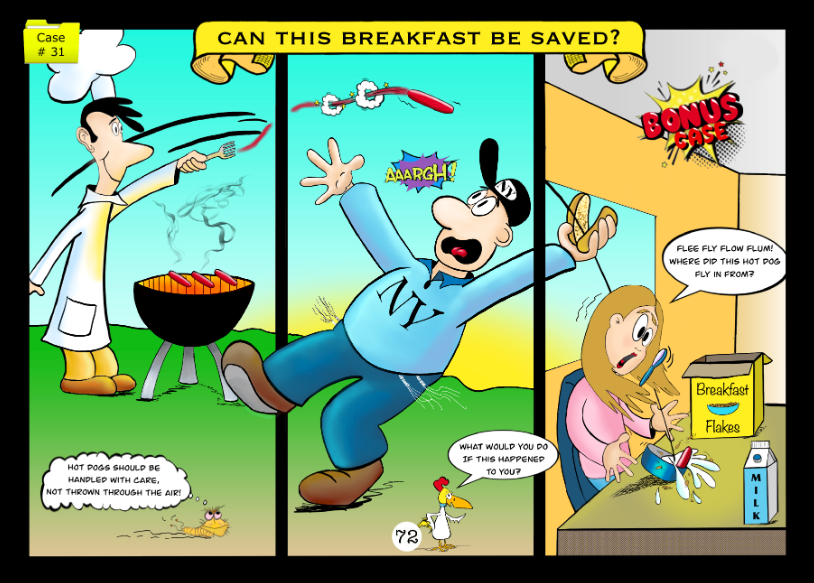
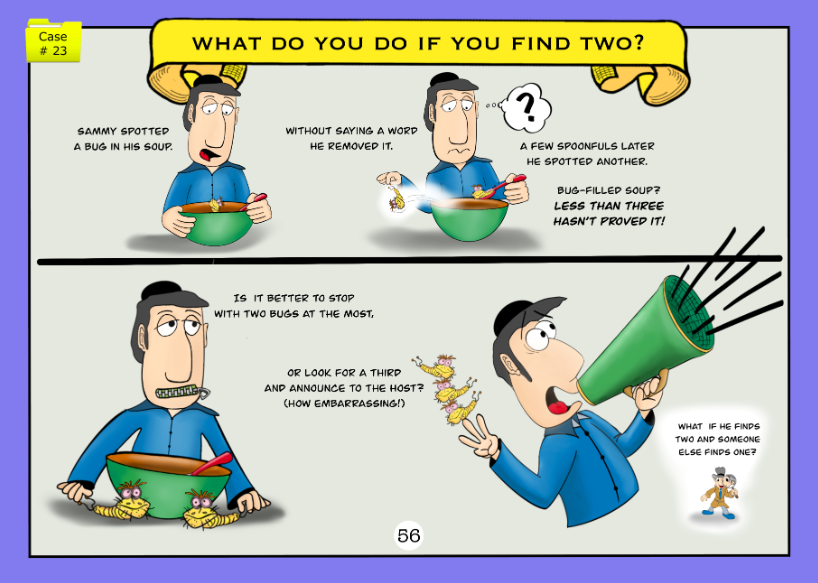
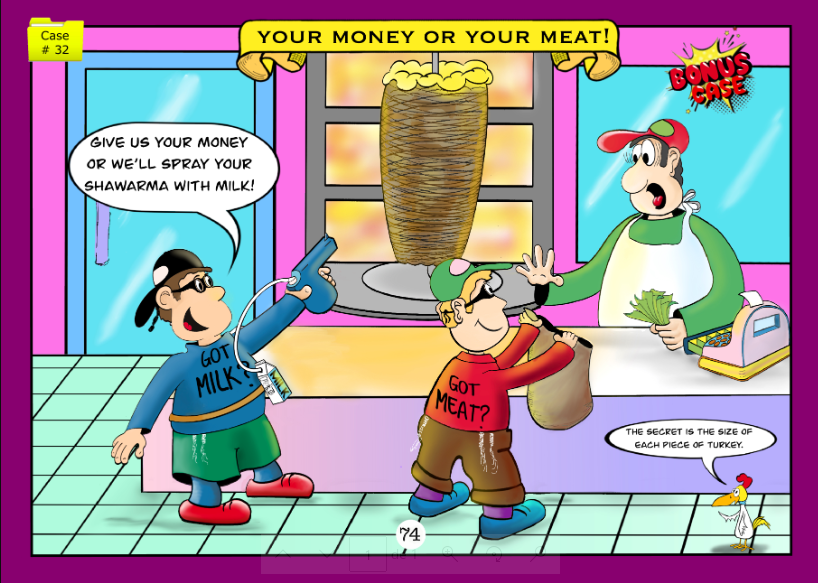
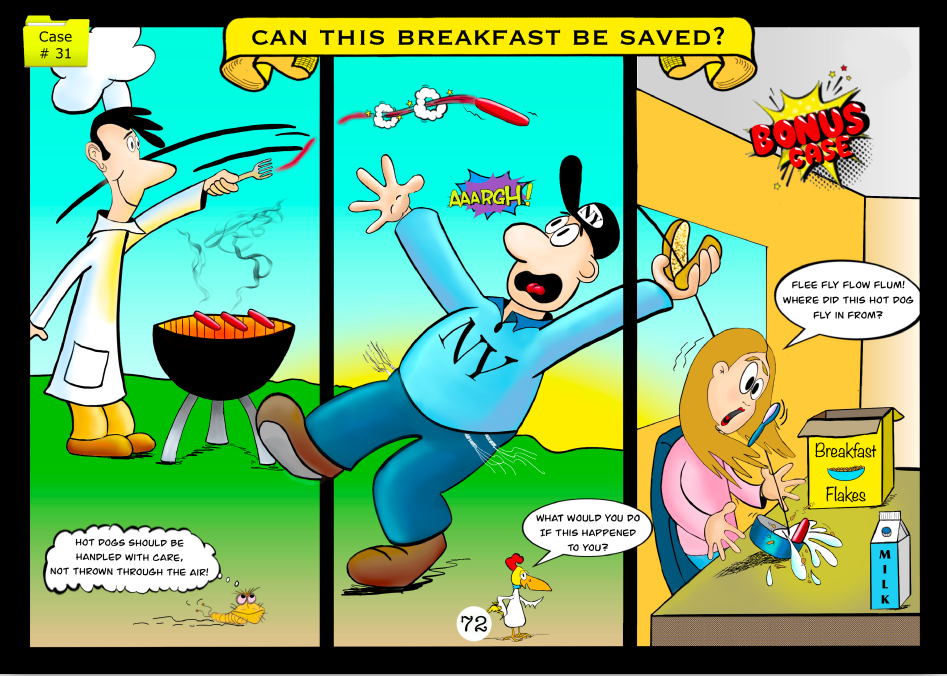
  • What would you do?
  • Would you eat it?
  • If you were the Rabbi, would you allow it?

2. Point to things on the page

3. Get your audience to vote

4. If you are the presenter for example you are at a Shabbat table.

Take just 5 minutes to prepare. Read the case explanation page on your own, not in front of everybody. Then when you present it you will be engaged with everyone instead of trying to understand it on the spot. “An ounce of prevention is worth a pound of cure.” If you are not sure about something look at the Words To Remember in the back of the book. Go to the glossary to get all the background you need.

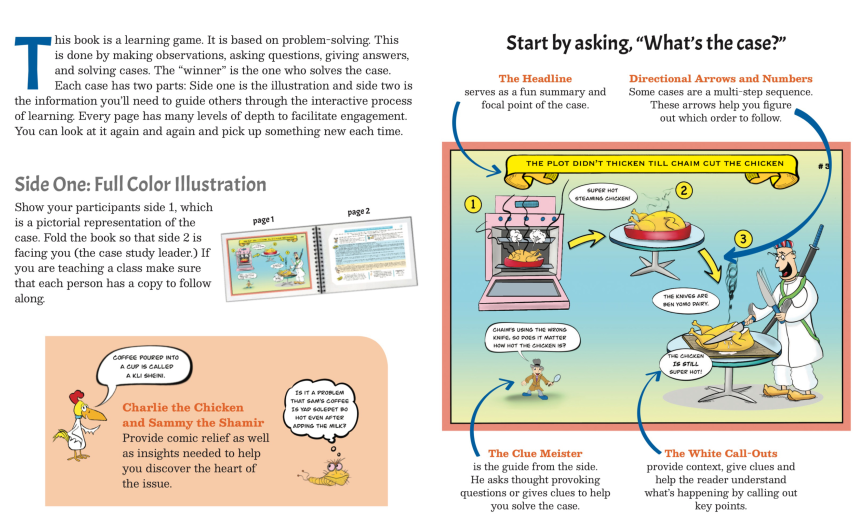
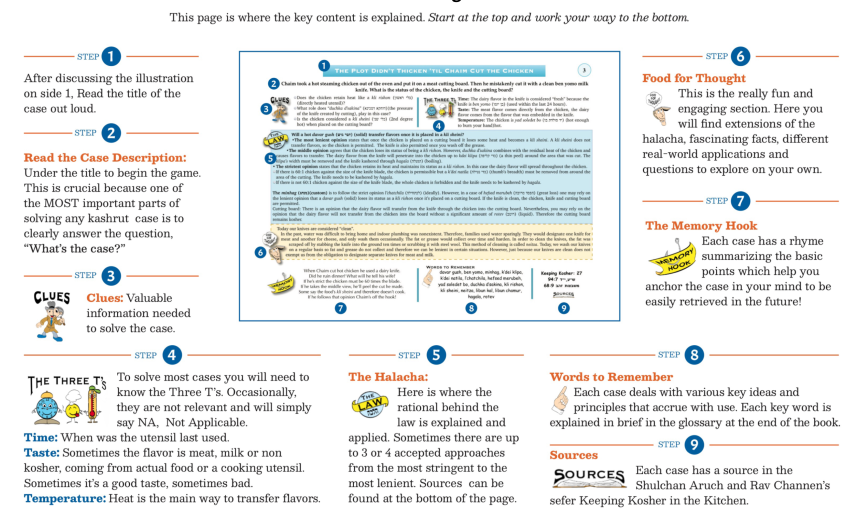
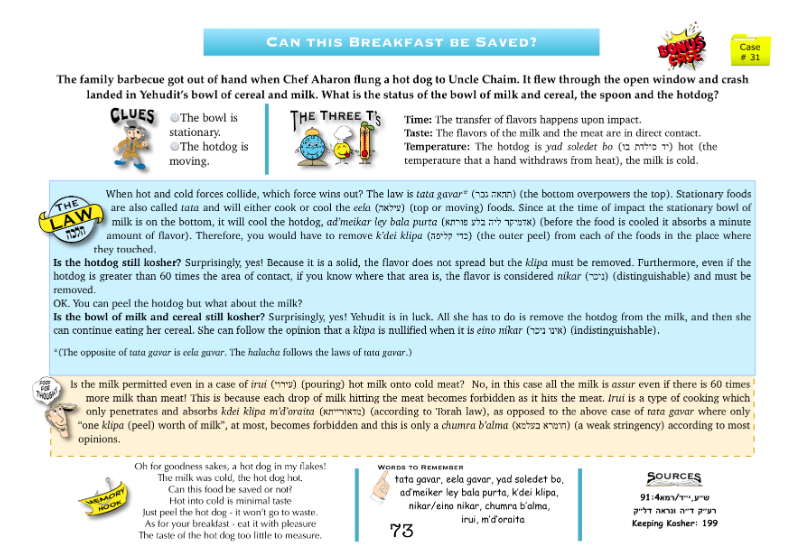
5. Read the Clues and The Three T’s Time, Taste and Temperature out loud.

This gives everyone some background information. Then ask then them to break out in pairs or you can invite them to start giving their opinions right away whether it is kosher or treif. After everybody votes read The Halacha and The Food for Thought

6. Wrap it up by reading the “Memory Hook” Rhyme outloud

Alternatively you can ask someone else to read it. Some people read the rhyme and ask everyone to try and guess what the last line in the rhyme is.. 

7. Have fun and share the light of Torah!

David sometimes felt like he was worth less than the ice-cream. When the ice-cream came to the table, everyone sat quietly and got involved in eating it. But when David tried to say a ‘Dvar Torah’, his kids yawned, or left the table to jump on the trampoline. His wife, Kayla, was always asking him to say something ‘spiritual’. When David heard about the Great Game of Kashrut he was skeptical. But with nothing to lose, he bought it, and opened it up at the Shabbat table to case number 1. It was amazing. Everyone looked at ‘Diverting a Dining Disaster’ and began talking at once. David fielded comments, asked questions, and gave away clues. And then everyone listened spellbound as David unpacked the case and explained the halacha which was clearly broken down on the next page. Kayla then stowed away the book at the top of her bedroom closet until next week. For this family, this will be a special Shabbat treat.

Rabbi Jacobs spent hours preparing his lessons. He liked to think he was a great teacher, but this year’s eighth grade class was starting to erode his confidence. He could not get them enthused about anything. It wasn’t like they acted-out, they were just…bored, disinterested and lethargic. He wished he could somehow spark their interest in anything to do with learning, but all his efforts were falling flat. He knew that he could just play games, but didn’t their parents send them to school to learn? The responsibility weighed heavily on his shoulders. A few weeks after Chanuka, when the world was cold, the trees were bare, and his classroom was more tired than ever, Rabbi Jacobs noticed an intriguing shot of color in the weekly circular. It was a book about kashrut, exactly the subject he was struggling to interest his students in. He bought it on a whim, hoping for some inspiration. Now he’s begging the principal to sponsor 22 hard copies, one for each boy in his classroom. And he’s convinced that no other eighth grade in the country is as excited about the laws of kashrut as his class is.

“Sammie!! You’re making this entire kitchen trief with those onion rings, I’ve already thrown out 2 pans, I NEED this grill pan to make— “Mmgrrmph. It’s fine.”

“Oh yeah? Well, Rebbetzen Gitter once said in her shiur that if you cut onions with a milky knife they become milky and so if you put them in a meaty pan the pan is called ‘ben yomo’ and then you can use it just for that day and after it needs to be burned in your sereifas chametz fire and I think also the knife has to be buried, because it is too small to be batel beshishim and the chopping board has to kashered in your kettle, wait, what happens to the kettle then? Does it have to be buried as well?”

Julie felt like every kashrut encounter was a minefield for arguments and anxiety. She wondered, Does everyone find it so hard? When Sammie bought The Great Game of Kashrut home one evening, she was almost afraid to open it up. But boy is she happy she did. Because, to her great surprise (and Sammie’s ‘I told you so!”)She realized that she is able to grasp kashrut concepts without feeling overwhelmed and confused. And learning it is a lot simpler, and a lot more fun than she imagined. (And a lot cheaper—because not every pot has to be thrown away after a blunder).